How ACO Works on UK Sneaker Drops in 2026
How automated checkout ACO actually works on UK sneaker drops in 2026. FCFS vs raffle formats, success rates, fees, and what margins really look like.

Picture this: a hyped Nike collab drops at a UK boutique. You have a bot stack, your profiles are loaded, your proxies are spinning. Then you open the product page and see it. A raffle. Enter your details, one entry per customer, winner selected at random. Your automated checkout tool is nearly useless. That is not a hypothetical failure. That is the default experience at Footpatrol, END, Size, and Offspring, four of the biggest UK boutique accounts that matter most on a hyped release.
Understanding how automated checkout (ACO) actually works on UK sneaker drops starts here, with drop format. Get that wrong and everything else is noise. This guide covers the full picture: mechanics, formats, realistic success rates, risk, and the margin maths you need to run before you spend a penny on a slot.
What Is ACO and How Does It Actually Work?
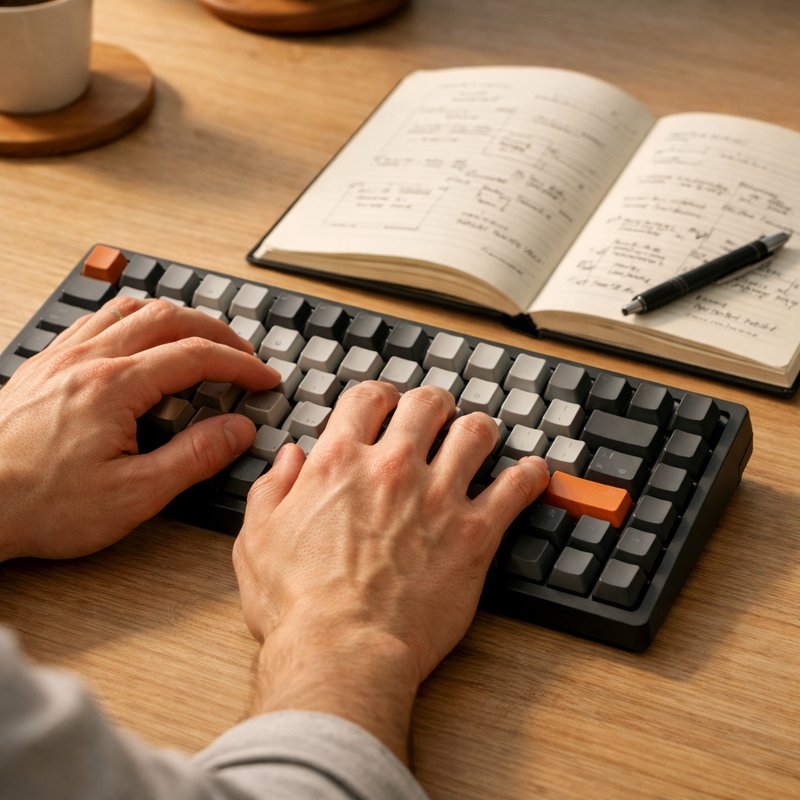
ACO stands for automated checkout. In the context of UK reselling, it almost always refers to a staff-run service rather than a bot you operate yourself. A cook group or a community like Hit The Drop runs the bot infrastructure on your behalf during a competitive drop, and you supply the profile details needed to attempt a checkout.
The Step-by-Step ACO Workflow
The typical flow works like this. First, staff announce that a coming release is eligible for ACO entry. They open a profile submission window: you send your name, delivery address, and payment details so the bot can attempt a real checkout on your behalf. Staff then configure and execute the bot task. After the drop closes, results are reported: either your checkout succeeded and you owe the service fee, or it did not and you owe nothing.
That last point is worth underlining. At Hit The Drop, the ACO service runs on a pay-after-success model. The fee is a percentage of the projected margin on the item, and it is only charged when a checkout actually lands. If the bot does not secure the item, there is no charge. This model is consistent with how leading UK-adjacent ACO services describe their operations: the service earns when you earn. That alignment matters.
Why ACO Is Not a Guarantee
Even a well-configured bot, running on clean residential proxies with fresh profiles, can fail. Stock allocations are finite. Retailers upgrade their bot detection. Profile eligibility checks can reject submissions before a cart is even attempted. ACO raises your probability of a confirmed checkout on a supported release. It does not guarantee one. Anyone telling you otherwise is not being straight with you.
UK Drop Formats Explained: FCFS, Raffle, and LEO (and Why Format Decides If ACO Works)

Why Most UK Boutique Drops Are Raffles
The UK sneaker market is raffle-dominant at boutique level, and that is by design. Retailers moved to raffle systems specifically because first-come-first-served (FCFS) drops were being hollowed out by bots before genuine customers could land a pair. Modern raffle systems use identity verification, email and phone validation, CAPTCHA challenges, and IP duplication filters to make automated entry extremely difficult. Footpatrol alone has run over 1,200 sneaker raffles in its history. The raffle model is not going anywhere.
What that means practically: if you are subscribing to an ACO service primarily to target UK boutique drops at Footpatrol, END, or Size, you need to ask very specifically which releases that service can actually support with bot entry. Many cannot.
How Raffle Anti-Bot Tech Neutralizes ACO
Raffle platforms are architected to be slow and human-verified by design. There is no speed advantage to exploit because entries are collected over hours or days and winners are drawn randomly from eligible submissions. A bot that fires off entries in milliseconds gets the same outcome as a human who enters manually on their lunch break, assuming both profiles pass the eligibility checks. The edge ACO provides on FCFS drops simply does not transfer to a properly run raffle.
That said, scale still matters in raffles. If a release allows multiple household entries or if you are entering across several accounts, volume can improve your statistical odds. That is a different service from ACO checkout, though. Our mass raffle entry service is designed for exactly that scenario, particularly on Nike SNKRS and EQL draws.
FCFS Releases: Where ACO Actually Has an Edge
On a genuine first-come-first-served release, speed is everything. A bot firing checkout requests in under a second, using residential proxies to appear as a local customer, will consistently outpace manual buyers. FCFS releases on Nike.com, certain Adidas drops, and selected retailer restocks are where ACO earns its keep. The problem is that the most hyped UK releases tend to be raffle-gated. Knowing which is which, before the drop, is the tactical work that separates a careful reseller from someone who just spends money on slots and hopes.
For a deeper look at how profit stacks up on specific FCFS-eligible sneaker releases, the UK sneaker reseller profit per pair breakdown runs through the real numbers on recent drops.
Self-Run Bot vs. Cook-Group ACO Slot: Which Setup Makes Sense for UK Resellers?
The Self-Run Bot Setup: Upfront Cost and Ongoing Burden
Running your own bot stack is a legitimate path, but the costs stack up fast. A capable sneaker bot licence typically costs hundreds of pounds per year on the secondary market (popular bots sell for far above retail). On top of that, you need residential or ISP proxies (priced per gigabyte or per thread), a CAPTCHA solving service, and at least a basic understanding of task configuration, profile management, and IP rotation. If the bot updates do not keep pace with retailer countermeasures, your whole stack can go dead overnight.
The honest answer: for most UK beginners, the upfront investment and the learning curve are not justified unless you are planning to operate at serious volume across multiple retailers and drop types. And if you do not have the volume, the per-drop cost per unit is high.
Cook-Group ACO Slots: Lower Entry, Zero Control
UK reselling communities have built in-house ACO services specifically to remove the technical and financial barrier for members who want the advantage of automated checkout without owning their own bot. You pay a membership fee, submit your profile for supported drops, and staff handle the execution. The trade-off is that you have no visibility into the bot configuration and no control over the result until it is done.
The bigger risk in the cook-group slot market is not the model itself. It is the informal, unregulated nature of many providers. Discord and Twitter are full of individuals selling ACO slots with no verifiable track record, no published success rates, and no meaningful refund mechanism if they disappear. Before you send payment details or money to any ACO provider, ask for evidence of past results, understand exactly what payment method you are using and what recourse it gives you, and check that the community has a public reputation you can verify. If a provider refuses to show results or asks for irreversible payment methods, walk away.
Hit The Drop's pay-after-success ACO service is built around that trust problem. Because the fee only applies when a checkout lands, the incentive to deliver is built into the structure. There is no upfront slot charge that disappears with your money if the drop does not go.
Realistic Success Rates and the Account Ban Risk
How Many ACO Slots Actually Result in Confirmed Orders?
No honest ACO provider publishes a universal success rate, because success rates vary enormously by release, retailer, stock allocation, and the quality of the profiles and proxies used. What the data does show is the scale of the problem. Nike reports that bots account for 10 to 50 percent of users on SNKRS depending on the release, and that Nike bans up to 12 billion bot attempts every month. That tells you two things: bot volume is enormous, and Nike's detection and enforcement is operating at matching scale. Not every bot task ends with a checkout.
When a slot does succeed at checkout, that is not the end of the story either. Post-sale audits are real. Cancelled orders after payment, with items never shipped, are a documented consequence of botting on major retail platforms. You need to factor cancellation risk into your profit projection, not treat a confirmed order as a guaranteed delivery.
Nike and Retailer Enforcement: The Post-Sale Audit Problem
Nike's updated Terms of Service give the company the right to charge restocking fees, refuse refunds, and suspend accounts where resale intent is suspected. That is not a theoretical clause. It means that even after a bot successfully checks out, Nike can reverse the order, keep a portion of your money, and ban the account used. The financial exposure is real: you could pay for a slot, have a successful checkout, and still end up with no item and a suspended account.
This is not a reason to avoid ACO entirely. It is a reason to treat every slot as a calculated risk rather than a guaranteed return, and to use clean, purpose-built accounts rather than accounts with any personal or financial history you care about. Our account generation service exists precisely for this reason: clean accounts reduce the blast radius if a retailer's audit hits.
After the Cop: Fees, Platform Choice, and Realistic 2026 Margins

Resale Platform Fees and Net Margins
Securing a pair via ACO is only step one. Where you sell it determines your net margin. UK resellers have access to StockX, GOAT, eBay, Vinted, and Depop, and each has a different fee structure that must be worked into your numbers before the drop, not after. StockX charges a combined seller and transaction fee that can reach 19 percent depending on your seller level. eBay fees, including the final value fee and PayPal or payment processing costs, typically sit between 12 and 15 percent. Factor in postage, packaging, and any returns risk and the actual margin on a pair can compress fast.
Data from 2024 shows that only 47 percent of new sneaker releases traded above retail, down from 58 percent in 2020, with per-pair margins on most drops compressed to 10 to 25 percent. That is not a wide margin to absorb ACO fees, proxy costs, and platform charges. On a pair retailing at £150 with a 15 percent resale premium, your gross gain is £22.50. Subtract 15 percent in platform fees (£25.50 on the resale price, assuming a £172.50 sell price), postage, and the ACO service fee, and you could be looking at a very thin return or even a loss.
Selecting Drops Worth the ACO Spend
The discipline that separates a consistent reseller from someone who just chases hype is this: run the numbers before you commit, not after. For every drop you are considering entering via ACO, work backwards from the realistic resale price (use sold listings on StockX or eBay, not asking prices), subtract platform fees, postage, and the ACO fee, and check whether the residual is worth the risk of a cancelled order or a failed checkout.
Nike's oversupply of certain models has eroded resale premiums to the point where previously reliable flips now sit close to retail. Being selective and data-driven is not optional. It is the difference between building a real side income and paying service fees on drops that never cover their costs. The guide on how to run reselling like a real business goes deeper on the cashflow and margin discipline that makes any of this sustainable.
Running ACO Properly as a UK Reseller
ACO is a genuine edge on the right release, in the right format, with the right infrastructure behind it. On a FCFS drop with meaningful above-retail resale value, a well-run ACO service raises your odds of securing stock. On a raffle-gated UK boutique drop, it does very little. Knowing the difference, before you spend, is the work.
The other piece is vetting your provider. Pay-after-success structures, transparent success tracking, and a verifiable community reputation are the minimum standards. Anything that asks for upfront slot fees with no track record and no recourse is a red flag worth taking seriously.
If you want to approach UK reselling with that kind of operational discipline, Hit The Drop is a UK Discord community and ACO service built around exactly that mindset. The ACO fee only applies when a checkout lands. The community exists to help members build real, sustainable reselling operations, not to sell a dream. If that sounds like the environment you want to operate in, apply to join and see whether it is the right fit.
🧡
Sources
- https://dashboard.houseofcarts.io/resources/what-is-aco
- https://cook-groups.com/what-is-a-sneaker-raffle/
- https://houseofresell.com/news/new-feature-for-house-of-resell-members-aco-auto-checkout
- https://proxidize.com/blog/sneaker-bots/
- https://queue-it.com/blog/how-do-sneaker-bots-work/
- https://www.shelftrend.com/fashion/sneaker-resale-profit-margins-2025-marketplace-analysis
- https://cook-groups.com/is-sneaker-reselling-dead/
Skip the queue
Use JUMPSTART as your referrer when you apply to join Hit The Drop and you skip the waitlist with access approved straight away.