ACO Success Rates UK 2026: What to Give Your Service
What to give your ACO service to maximise success rates as a UK reseller in 2026. Profile fields, card matching, proxy types, and responsible submission habits.

Many UK resellers submit weak profiles to their ACO service and blame the platform when checkouts fail. The reality is that incomplete billing details, duplicate phone numbers, and mismatched card authorisation settings are the real bottleneck. The bot does not compensate for bad inputs. It simply executes them, badly, at speed.
This guide covers what you actually need to supply to your automated checkout service to give your profiles the best possible shot. No internal bot mechanics, no server configuration. Just the member-side variables that sit entirely within your control.
Why Your Profile Inputs Matter More Than the Bot
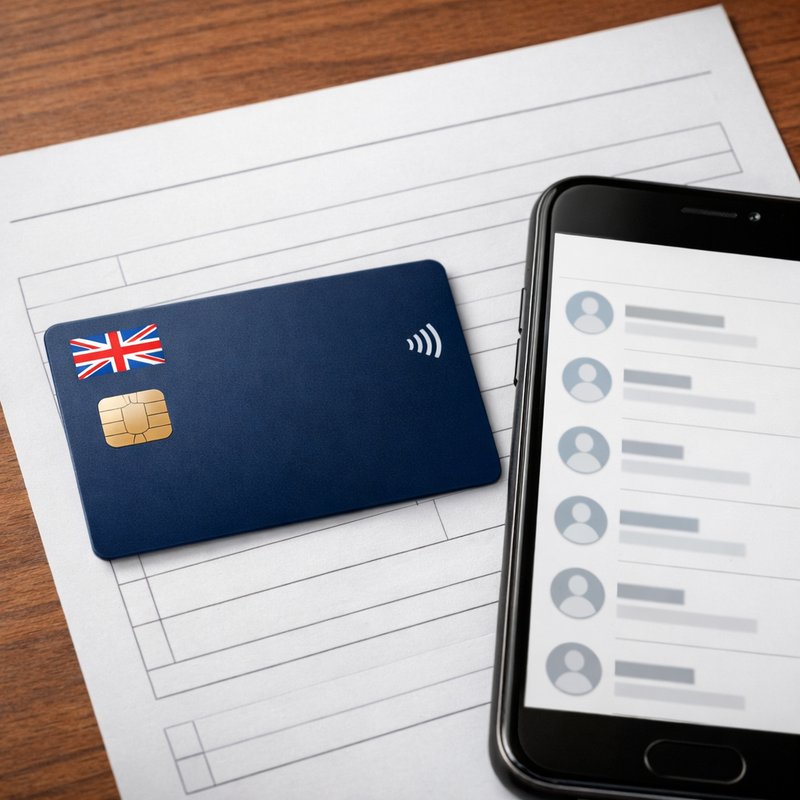
The three forces destroying your success rate
There are three common causes of ACO checkout failure: incomplete profile data, duplicate phone numbers, and billing addresses that do not match what the card issuer holds on record. Bot detection and retailer security come much further down the list than most members assume.
The ACO service is infrastructure. It runs fast, it runs at scale, and it executes your profiles as submitted. If those profiles are missing a field, contain a recycled phone number, or carry a billing address that fails the retailer's Address Verification System (AVS) check, the service cannot fix that mid-checkout. The failure is baked in before the drop even opens.
Profile accuracy is the one variable that sits entirely within your power. Bot quality and retailer defences are not. That asymmetry is worth sitting with.
What the House of Carts 80% benchmark actually tells you
In 2026, House of Carts documented an 80% ACO success rate across Pokémon TCG preorder drops. That number is real, but it applies specifically to members who submitted complete, correctly matched profiles. It is not an average across the whole submission pool.
If I were looking at a service where 80% of users were landing drops and 20% were consistently failing, the first question I would ask is whether the failing users had completed every required field accurately, or whether they were submitting half-finished profiles and hoping the automation would compensate. The data is consistent: profile accuracy, payment readiness, and attention to retailer-specific rules are the controllable variables that determine whether a submission is usable.
The 80% is the ceiling for well-prepared members. Weak inputs do not get you 80%. They get you significantly less, and they get you frustrated.
What a Complete, Clean ACO Profile Actually Looks Like
The non-negotiable field list
A checkout-ready profile must include every one of the following fields, verified for accuracy before submission. There is no partial credit:
- Card number, CVV, and expiry date (exactly as printed on the card)
- Billing address and postcode (matching what your card issuer holds on file, character for character)
- Shipping address and postcode (valid, deliverable, formatted correctly for Royal Mail)
- A unique phone number (not shared with any other profile; area code matched to the billing address)
- Email address (a clean address not associated with prior bans or flagged orders)
- Store account credentials where the retailer requires a registered account for checkout (Pokémon Center UK, for example, requires this)
Every field on that list is a potential failure point if it is missing, wrong, or shared across profiles. Incomplete profiles cause checkout failures at the worst possible moment, in the seconds before a drop closes, when there is no time to fix anything.
Why one missing field destroys the whole attempt
ACO runs at speed. The checkout sequence executes in order, and a single invalid or missing field stops it. You do not get a prompt to correct it mid-drop. The attempt simply fails, and the stock moves on to the next checkout in the queue.
Every support ticket I review where a member has missed a drop often includes a profile that is missing a valid phone number, a properly formatted postcode, or a billing address that does not match the card issuer's records. Verify every field before you submit, not after you miss.
For members preparing Pokémon Center UK profiles specifically, our guide on preparing Pokémon Center profiles for a major UK set launch walks through retailer-specific requirements in detail.
Billing Address, Phone Number, and Card Matching (Where Most Members Go Wrong)
Why UK card AVS matching is stricter than US checkout flows
Address Verification System (AVS) checks on UK-issued cards work differently from US Shopify store flows. UK retailers and payment processors compare the postcode and the first line of your billing address against what your card issuer holds. Even a single character difference, a missing flat number, an abbreviated road name, triggers a mismatch flag and a declined authorisation.
Neobank cards from Monzo and Revolut are a particular problem. These are popular among younger resellers because they are easy to open and manage, but they frequently fail authorisation on preorder holds. The billing address registered with the card issuer does not always match what the member submits to the checkout, either because the member updated their address in the app without thinking about it, or because the card was opened at a previous address. Check your registered billing address in your banking app before every submission.
Traditional Visa debit cards from high-street banks tend to perform more reliably on UK preorder holds, partly because the AVS data is more stable and partly because the card is less likely to be flagged as a prepaid or virtual instrument by the retailer's fraud scoring.
Phone number duplication and area code logic
Each profile must use a different phone number. This is not a preference; it is a rule that directly affects your success rate. Mismatched or duplicated phone numbers raise anti-bot flags across all profiles that share them. If three of your profiles carry the same mobile number, a single flag on one of them can cascade to the others.
The area code must also match the billing address geography. Submitting a London billing address with a Manchester-format phone number is a detectable inconsistency on modern fraud scoring systems. UK mobile numbers do not carry geographic area codes in the same way landlines do, which gives you more flexibility, but the format still needs to be a valid, plausible UK number. Do not invent sequences; use a legitimate number generation approach that preserves correct UK format.
Address jigging done right
Address jigging is the practice of creating unique, legitimate address variations per profile using house numbers, flat numbers, or secondary address lines within the same postcode. It is a standard technique across professional reselling operations, and it is legitimate when done correctly.
The key word is legitimate. Jigging means varying real address components, not inventing postcodes that do not exist, fabricating street names, or using addresses associated with commercial premises or vacant lots. A well-jigged address is a real, deliverable address. It is just structured differently from your other profiles to make each one unique. Done right, it reduces payment flag risk. Done badly, it creates order cancellations and fulfilment refusals.
Choosing the Right Proxy Type for Each Task: Residential, ISP, and Datacenter Explained

ISP proxies (the checkout standard)
ISP proxies deliver 5-20ms ping versus 100-500ms for residential connections, which makes them the current standard for checkout tasks where latency directly affects success. They combine datacenter-grade speed with the trust score of a residential IP, because they are hosted on real ISP infrastructure rather than cloud servers.
For time-sensitive FCFS (first come, first served) checkouts on UK drops, ISP proxies are the correct tool. If you are supplying your own proxies to a service, confirm they are ISP proxies, not residential, before a high-volume drop.
Residential proxies (slower but trusted)
Residential proxies route through real consumer IP addresses, which means they carry a high trust score with retailer fraud systems. Their disadvantage is latency. For raffle entries and tasks where timing is less critical than trust, residential proxies are appropriate. For FCFS checkout where milliseconds count, they are the wrong choice.
For a more detailed breakdown of when to use each type, our guide on residential, ISP, and datacentre proxies for UK drops covers the tradeoffs in full.
Why datacenter proxies fail on modern retailers
Datacenter proxies are fast, but they are identified as non-residential traffic by most modern retail bot defences. Documented community data shows datacenter proxies achieving a 12-18% checkout success rate on major drop platforms versus 45-60% for residential IPs. On UK retailers with active bot mitigation, datacenter IPs are frequently blocked at queue entry, before checkout even begins.
If I were watching members waste money on perfectly crafted profiles, only to see them submitted through a datacenter proxy pool, the outcome would be predictable: the retailer flags the transaction as high-risk because the IP location does not match the billing postcode or the expected geography of a UK consumer.
Geo-targeting to UK IP ranges for UK drops
This is a point almost every competitor guide misses, because most are written with a US market in mind. For UK-exclusive drops, including Pokémon Center UK, End Clothing, and JD Sports UK releases, your proxies must originate from genuine UK IP ranges.
Submitting profiles through US or EU residential IPs on a UK-exclusive drop raises fraud flags. The transaction originates from a geography that does not match the shipping address, the billing postcode, or the expected location of a UK consumer. Retailers that geo-restrict their drops use IP location as one layer of that restriction. Confirm your proxy provider can supply verified UK IPs before you commit them to a UK-specific release.
For more on testing your proxy setup before a major drop, see our guide on how to test your proxy pool before a UK drop day.
Submitting Responsibly: Avoiding the Profile Habits That Quietly Kill Your Success Rate
Burning through cards and creating downstream chargebacks
Submitting invalid, cancelled, or over-limit cards across multiple profiles is one of the fastest ways to damage your ACO outcomes. When a card fails authorisation, the retailer records that failure against the associated email, address, and sometimes the device fingerprint. Multiple failures from the same submission pool create a pattern that flags future attempts from related profiles.
Chargebacks are worse. A chargeback on a successful checkout does not just reverse one transaction. It creates a record with the payment processor and the retailer that can trigger order cancellations on fulfillment, account bans, and restrictions that affect other members of a shared service. One bad actor submitting invalid cards hurts everyone in the pool.
Recycled proxies and shared pool risk
The one-proxy-per-task rule is not optional. Running multiple tasks on a single proxy guarantees rate limiting, and once a proxy is rate-limited mid-drop, every task running through it fails simultaneously. If you are managing your own proxy allocation, never assign the same proxy to two profiles on the same drop.
Similarly, avoid using proxies that have been shared across multiple members without being rotated. A proxy with a flagged history on a retailer's fraud system will carry that flag into your next submission, regardless of how clean your profile is.
Why fabricated details trigger cascade failures
Invented postcodes, non-existent street addresses, and fabricated phone numbers do not just fail one checkout. They create order cancellations, fulfilment refusals, and service-wide reputation damage that affects members who submitted correctly.
The members who succeed long-term treat their profile data like their business depends on it, because it does. One fraudulent submission does not just lose one drop. It risks the credibility of the entire service, and in a space where retailer relationships and fulfilment rates matter, that is a cost no individual member should be willing to impose on others.
Running reselling as a proper business means applying the same discipline to your profile hygiene that you apply to your margin tracking. If you want a framework for the broader business side, our guide on how to run reselling like a real business covers the operator mindset in detail.
Before Your Next Drop: Raise a Ticket
If you are unsure whether your profiles are strong enough to submit, or you want a pre-drop quality review before a major release, raise a ticket with the support team. That is exactly what the channel is for. A quick profile review before the drop opens is a far better outcome than a failed checkout after it closes.
Profile quality is the controllable edge. The service handles the speed and the scale. You bring the inputs. If those inputs are solid, the mechanics follow. If they are not, no amount of automation fixes them in real time.
If you want to do this properly, from profile discipline through to margin tracking, Hit The Drop is a UK Discord-based community and ACO service built for operators who take reselling seriously. The ACO runs on a pay-after-success basis: you only pay a fee when a checkout lands, calculated as a percentage of the projected margin. When you win, we earn. When you do not, we do not. Apply to join and take the first step toward running your reselling operation the right way.
🧡
Sources
- https://dashboard.houseofcarts.io/resources/what-is-aco
- https://dashboard.houseofcarts.io/resources/pokemon-aco-service
- https://askmebazaar.com/blog/the-complete-beginners-guide-to-copping-sneakers-in-2026
- https://databay.com/blog/sneaker-bot-proxies-guide
- https://marsproxies.com/blog/how-to-jig-your-address/
- https://proxycove.com/en/blog/isp-proxies-sneaker-copping-guide
- https://www.marchingdogs.com/blogs/house-of-carts/house-of-carts-june-results-80-success-rate-on-pokemon-pre-orders-2026
Skip the queue
Use SKELETON as your referrer when you apply to join Hit The Drop and you skip the waitlist with access approved straight away.