Vinted vs eBay for Trainers UK: Which Wins in 2026?
Vinted vs eBay for selling trainers in the UK: fee structures, net payouts at three price points, buyer demographics, and the operator verdict for 2026.
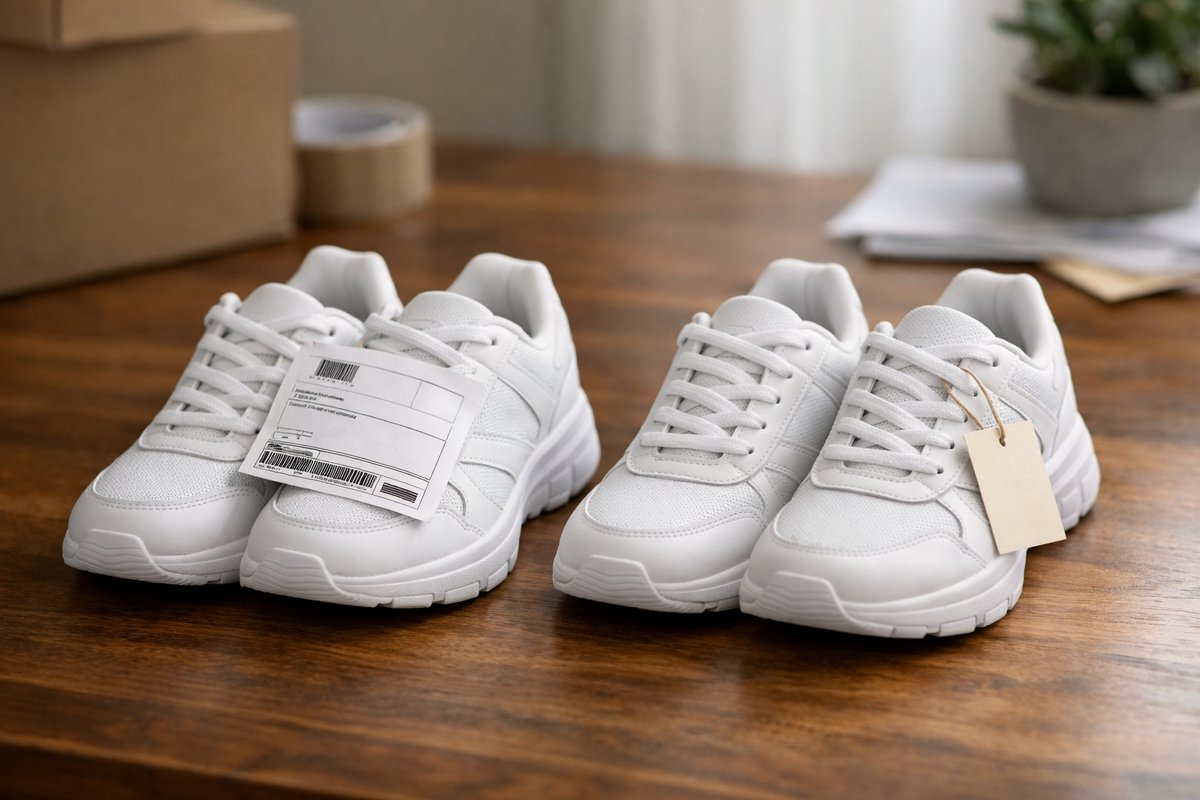
The verdict: for everyday trainers priced under £80, Vinted keeps more money in your pocket because you pay zero seller fees. For limited releases, deadstock, or any pair priced above £100, eBay's reduced 7 percent category rate for trainers, its international buyer pool, and its auction format almost always produce a better net payout and a faster sale. If you are a business seller in the United Kingdom, the choice is not either/or: it is routing by price band. Vinted for volume mid-market stock, eBay for heat. Read the full breakdown before you default to one or the other.
The UK re-commerce market is projected at £7.4 billion in 2026, with Vinted holding roughly 34 percent of fashion resale and eBay at 28 percent. Vinted reported EUR 1.1 billion in group revenue for 2025, up 38 percent year on year, with GMV of EUR 10.8 billion across 26 countries. This is not a niche alternative. Vinted now has more than 17 million UK users and has become the UK's third-largest fashion retailer by customer numbers. The platform is serious, and the fee gap is real. But for trainer resellers, the fee story is more complicated than the headlines suggest.
The Fee Gap Is Real, But It Is Not the Whole Story

Vinted charges UK sellers nothing. The buyer pays a protection fee of approximately 5 percent plus £0.70, and that is deducted from the buyer's checkout total, not from your payout. If you list a pair for £65, you receive £65 minus postage costs. That is the full picture for a standard Vinted sale.
eBay is more layered, and the structure matters enormously depending on your seller status and your price point. Since October 2024, private UK sellers on eBay pay zero final value fees in most categories. The buyer pays a tiered protection fee instead. So the zero-fee advantage Vinted holds over eBay is most relevant for business sellers, not private sellers. The post must be honest about that distinction.
For business sellers, eBay's trainer category fees in 2026 are: 11.9 percent final value fee (FVF) on sales under £100, dropping to a flat 7 percent on sales at £100 or above. On top of that, there is a per-order fee of £0.40 for orders over £10 (this rose from £0.30 in February 2026), a 0.35 percent regulatory operating fee, and 20 percent VAT on all fees. If you are not VAT-registered, that VAT is a real cost you cannot reclaim, turning a headline 11.9 percent FVF into closer to 14 to 15 percent all-in.
Here is what that looks like in practice across three price points. Every figure assumes a business seller on eBay and a standard seller on Vinted.
| Criterion | Vinted (standard seller) | eBay business seller | | --- | --- | --- | | Seller fee rate | £0 seller fee (buyer pays ~5% + £0.70 protection fee) | 11.9% under £100 / 7% at £100+ plus £0.40 per-order fee plus 0.35% regulatory fee plus 20% VAT on fees | | Net payout on a £50 trainer | £50.00 (less postage) | ~£43.05 after 11.9% FVF + VAT on fees + £0.40 per-order fee | | Net payout on a £100 trainer | £100.00 (less postage) | ~£91.50 after 7% FVF + VAT on fees + £0.40 per-order fee + 0.35% regulatory fee | | Net payout on a £150 trainer | £150.00 (less postage) | ~£135.94 after 7% FVF + VAT on fees + £0.40 per-order fee + 0.35% regulatory fee | | Vinted Pro fee (authenticated sneakers) | 4% category fee applies on authenticated trainer sales via Vinted Pro | N/A | | VAT on platform fees | Not applicable (seller pays nothing) | 20% VAT added to all eBay fees; reclaimable only if seller is VAT-registered | | International buyers | UK-focused platform | Global marketplace; significant for limited releases where international demand drives price | | DAC7 reporting | Applies from 30 transactions or ~£1,700 in a calendar year | Same threshold applies equally | | Cashflow timing | Funds held 2 to 5 days after buyer confirms receipt | Regular managed-payments release cycle |
Facts last verified October 2026.
One important nuance: if you are selling through Vinted Pro and your trainers go through the authentication programme, you will pay a 4 percent category fee on the sale. That is not zero. It is still lower than eBay's 7 percent at the same price point, but it meaningfully undermines the "sell for free on Vinted" headline for anyone moving premium heat through the Pro programme. Factor it in before routing your stock.
For a deeper breakdown of how these fee structures interact with your real margins, see the eBay and Vinted fees UK 2026 guide on this blog.
Who Actually Buys on Each Platform, and Why It Changes What You Sell Where
Fees are only half the decision. If the buyers on a given platform are not looking for what you are selling, the fee structure is irrelevant.
Vinted's 17 million-plus UK user base skews younger and more female than eBay's. The dominant use case is browse-and-bargain: users scroll their feed looking for deals on familiar brands, often at price points under £60. They are value-conscious, they will offer below asking, and they are less likely to be searching specifically for a limited colourway by SKU. That is a genuine strength if you are moving clean pairs of Nike Air Max, Adidas Stan Smiths, or Vans at accessible prices. It is a weakness if you are trying to sell a heat release where the buyer needs to understand and pay a premium for rarity.
eBay operates on intent-driven search. A buyer looking for a specific Nike Dunk Low in a specific size will type the exact model name and filter by size. They are already pre-sold on the value. The auction format also does real work here: two committed buyers bidding against each other on a desirable pair will often push the final price above the listed ask, which is something Vinted's fixed-price model cannot replicate. Add international buyers into the mix and eBay's price-discovery mechanism for heat is genuinely superior.
This demographic and behavioural split is why platform routing by price band is the operator answer, not a universal recommendation.
Which Trainers Move on Vinted and Which Move on eBay
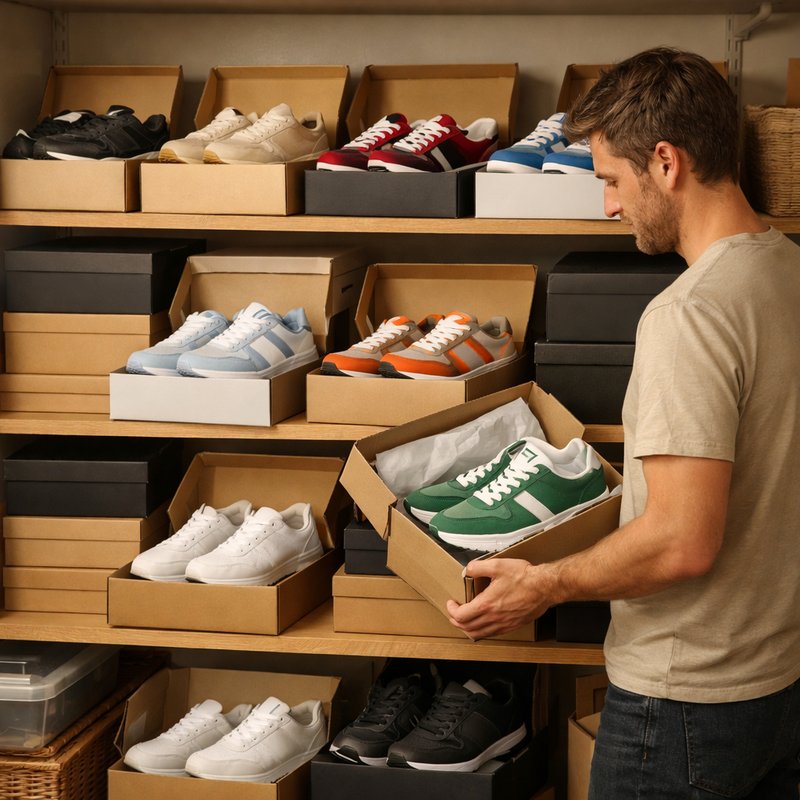
Here is a practical routing guide based on brand, price band, and buyer intent. This is not a guarantee of sell-through; it is a framework built from how each platform's buyer pool actually behaves.
- Vinted (under £80, everyday wearers): Nike Air Max 90/95/97, Adidas Superstar, Vans Old Skool, New Balance 574, Nike Huarache. Clean used pairs or dead stock from older general releases. Buyers are looking for value, not rarity. List at a competitive price and you will move quickly.
- eBay (£100+, limited releases and deadstock): Nike Dunk Low/High limited colourways, Jordan 1 Retro heat, New Balance 550 collaborations, Adidas Yeezy (where the market still holds), any pair with a meaningful StockX or GOAT reference price above retail. Use auction format for genuine heat and buy-it-now for pairs where you know the market price. The international buyer pool matters here.
- Either platform (£60 to £100, general releases with moderate premium): General Nike React, Adidas NMD, standard Jordan colourways. Test both. Your sell-through speed on Vinted may be faster; your net payout on eBay may be higher. Run the numbers for your specific pair before you decide.
One thing no competitor post addresses clearly: if you are running a proper reselling operation and securing limited releases through automated checkout (ACO) at scale, the pairs you are landing are almost exclusively in the eBay column. ACO is built for heat, and heat moves on eBay. Vinted is where you move the residual mid-market stock that does not hit the premium threshold.
Also worth noting: for a broader view of which platform fits which reselling category, including Pokemon TCG and Funko alongside trainers, the best platform to sell sneakers and Pokemon UK 2026 guide covers the full picture.
The Operator Case for Running Both, and the Honest Case for Committing to One
Running both platforms simultaneously sounds like the obvious answer, and for an established operation it often is. But there is real friction involved that most guides ignore.
Vinted has no open API and no automatic delisting when a pair sells. If you list the same pair on Vinted and eBay and it sells on eBay first, you have to manually pull the Vinted listing before a buyer purchases it there too. At low volume, that is manageable. At high volume, it is a genuine operational risk. A double-sale on a limited pair, where you cannot source a second unit, means a forced cancellation and a platform defect on your account.
The cashflow timing difference is also real for anyone managing stock float. Vinted holds your payment for two to five days after the buyer confirms receipt. eBay releases funds on a regular managed-payments cycle. If you are moving stock quickly and reinvesting proceeds into the next drop, a multi-day Vinted hold per sale adds up. This is particularly relevant for anyone following the kind of cashflow discipline covered in the reselling cashflow mistakes guide on this blog.
There is also a seller protection asymmetry worth knowing. Vinted's dispute resolution has a reputation for being buyer-biased, with sellers reporting cases where buyers claim imaginary faults on higher-value items and Vinted sides with the buyer. For a £40 pair this is an annoyance. For a £150 pair this is a material loss. eBay's seller protections, particularly for business sellers, are more established and better documented. That asymmetry alone is a reason to route higher-value stock to eBay.
The honest operator framework:
- If you are just starting out and moving occasional pairs under £70, Vinted is simpler and you keep more per sale. Start there.
- If you are scaling and moving mixed stock across price bands, run both but manage the cross-listing manually and price Vinted slightly above your minimum so you have room to drop if you need to clear quickly.
- If your operation is focused on limited releases above £100, make eBay your primary channel. The buyer pool, the price-discovery mechanism, and the seller protections all point that way. Use eBay sold listings data to benchmark your pricing before every listing goes live.
Tax, DAC7, and Record-Keeping for the Platform You Choose

This section matters regardless of which platform you choose, because the rules apply equally to both.
Since 1 January 2024, Vinted, eBay, and other platforms must report seller data to HMRC once a seller crosses 30 transactions or approximately £1,700 in gross sales in a calendar year, under the Platform Operators (Due Diligence and Reporting Requirements) Regulations 2023. The first data transmissions to HMRC happened in January 2026. This applies equally to Vinted and eBay. Choosing Vinted does not reduce your reporting obligations.
One point that is frequently confused: the reporting threshold is not the tax-free threshold. The £1,000 trading allowance is a separate rule that determines when income tax applies to your trading profits. A trainer reseller who buys 40 pairs at £30 and sells each for £45 has gross turnover of £1,800. They will likely be reported to HMRC under DAC7 if they cross 30 transactions. Their taxable profit (after deducting the cost of goods and allowable expenses) may still fall within the £1,000 trading allowance, but that is a separate calculation. Do not assume that being under the DAC7 threshold means no tax liability, or that being under the trading allowance means no reporting.
For business sellers who are not VAT-registered, the VAT on eBay's fees is a real cost that does not appear on Vinted. A seller turning over £40,000 a year in trainers on eBay is paying 20 percent VAT on every fee charge, and cannot reclaim it until they register for VAT (which is mandatory above £90,000 turnover but optional below it). On a £100 trainer at 7 percent FVF, the VAT adds roughly £1.40 to your fee cost. Across volume, that compounds. Vinted's zero-seller-fee model sidesteps this entirely.
Keep records from day one: purchase price, platform, sale price, fees, postage, and date. Both platforms will eventually ask HMRC, and you need your own records to match. For a practical system, the reselling inventory and profit tracking guide walks through a straightforward spreadsheet setup. For UK tax specifics, always refer to official guidance and consult a qualified accountant for personalised advice.
Which Should You Choose?
Choose Vinted if: you are selling everyday trainers under £80, you want the simplest possible listing process, you are a private seller where eBay's zero-FVF model closes most of the fee gap anyway, or you are building volume in mid-market stock and want fast turnover without fee drag.
Choose eBay if: you are a business seller moving limited releases above £100, you want access to international buyers who will pay a premium for rarity, you need the auction format to discover the true market price on heat, or you want the stronger seller protection that comes with eBay's business-seller framework.
Run both if: you have mixed stock across price bands, you can manage cross-listing manually without double-selling, and you are willing to route each pair deliberately rather than defaulting to one platform out of habit.
And if you are looking at how this platform decision fits into a wider reselling operation, the comparison with StockX vs eBay for UK sneaker selling covers the authentication-platform angle, which is a separate strategic question for premium heat.
Frequently Asked Questions
Does Vinted charge sellers any fees in the UK in 2026?
No. Vinted UK charges sellers zero fees on standard sales. The buyer pays a protection fee of approximately 5 percent plus £0.70 at checkout. If you are selling through Vinted Pro and your trainers go through the authentication programme, a 4 percent category fee applies to the sale price. That is the only seller-side cost on Vinted.
What is the eBay fee for trainers in the UK in 2026?
For business sellers, eBay charges 11.9 percent for trainers priced under £100 and a flat 7 percent for trainers priced at £100 or above. A per-order fee of £0.40 applies to orders over £10, alongside a 0.35 percent regulatory operating fee. All fees attract 20 percent VAT, which is only reclaimable if you are VAT-registered. Private sellers currently pay zero FVF on most categories following the October 2024 change.
Does choosing Vinted over eBay reduce my tax obligations in the UK?
No. DAC7 reporting rules apply equally to both platforms from the same threshold: 30 transactions or approximately £1,700 in gross sales per calendar year. Your income tax obligations are determined by HMRC rules on trading income, not by which platform you use. Choosing Vinted does not make you invisible to HMRC.
Can I list the same trainers on both Vinted and eBay at the same time?
Yes, but with real operational risk. Vinted has no open API and does not automatically delist a pair when it sells on another platform. If the same pair sells on eBay first, you must manually remove the Vinted listing immediately. A double-sale on a limited pair forces a cancellation, which damages your seller metrics. Cross-listing works if you manage it actively; it is a liability if you set and forget.
Which platform is better for selling Nike Dunk limited releases in the UK?
eBay is almost always the better channel for limited Nike Dunk releases above £100. The intent-driven search, the international buyer pool, the auction format for genuine heat, and the established seller protections all point that way. Vinted's browse-and-bargain buyer base is less well-suited to premium sneaker price points, and the platform's UK-focus limits your buyer pool relative to eBay's global reach.
If You Want to Do This Properly
Platform choice is one piece of the puzzle. The bigger edge comes from the systems around it: knowing your margin before you buy, tracking your cashflow accurately, securing stock at retail through proper tools, and treating this as a business rather than a series of one-off flips.
Hit The Drop is a UK Discord-based reselling community and automated checkout (ACO) service built for exactly that operator mindset. The ACO runs on a pay-after-success model: you only pay a fee when a checkout actually lands, and that fee is a percentage of the projected margin on the item. If it does not hit, there is nothing to pay. The community exists to help members build the systems, the stock knowledge, and the discipline to make reselling sustainable, not to sell a dream.
If that sounds like the right environment, apply to join Hit The Drop. Applications are reviewed in batches. There is a waitlist, and referred applicants move ahead in the queue.
🧡
Sources
- https://www.size.ly/tools/ebay-fee-calculator-uk
- https://dashvue.co.uk/ebay-fee-calculator
- https://marszalstudio.pl/en/vinted-pro-uk-2026-complete-guide/
- https://shopfront.app/blog/vinted-fees-uk/
- https://www.retailsector.co.uk/688691-vinteds-growth-and-the-new-economics-of-resale/
- https://brightonjournal.co.uk/why-millions-of-europeans-are-choosing-second-hand-and-how-vinted-turned-a-cost-of-living-crisis-into-a-e10-8bn-business/
- https://www.alto-accounting.com/insights/vinted-depop-ebay-selling-tax-uk
- https://resellradar.co.uk/blog/ebay-fees-explained-uk-sellers
Skip the queue
Use NOVOUCH as your referrer when you apply to join Hit The Drop and you skip the waitlist with access approved straight away.