Casio G-Shock GA-110PKM-7A Pokémon UK Resell 2026
Casio G-Shock GA-110PKM-7A Pokémon 30th Anniversary UK resell guide 2026: real GBP profit numbers, eBay fees, drop mechanics, and honest risk management.

Every time a hyped drop lands in the United Kingdom, the same pattern plays out: US secondary market numbers go viral, British resellers do rough mental maths in dollars, and then reality hits when they convert the fees into pounds. The Casio G-Shock GA-110PKM-7A Pokémon 30th Anniversary is no different. US secondaries averaged around $450 against a $270 retail price. That sounds like easy money until you do the GBP version. At £220 UK retail and with secondary prices tracking roughly £350 in the active community drops we are monitoring, the gross margin is a real but modest £130 per unit. Strip out postage and you are looking at a disciplined £70 to £120 net, not a lottery win. That is fine. That is still a genuine, repeatable operation if you approach it correctly.
This guide covers the real mechanics of the UK drop, what tools are worth using, and exactly how to model your net profit before you touch the buy button. One hard note before we start: previous G-Shock search results surface entirely different colourways with no resale premium. Make sure you are tracking specifically the GA-110PKM-7A, 30th Anniversary Pokémon edition. Nothing else applies here.
What Is the Casio G-Shock GA-110PKM-7A and Why It Matters for UK Resellers
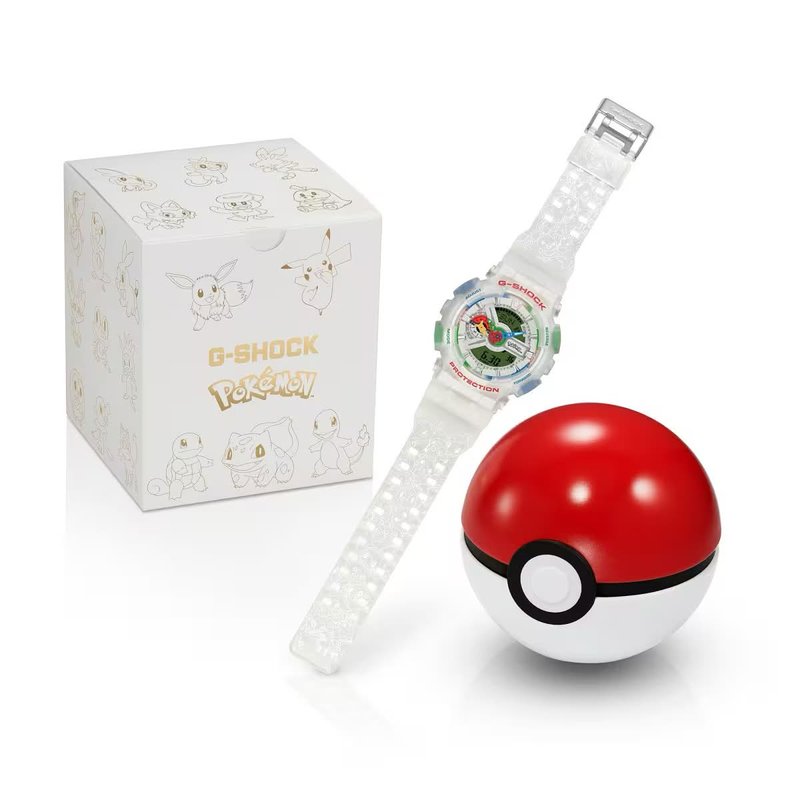
The first full-size G-Shock Pokémon collaboration
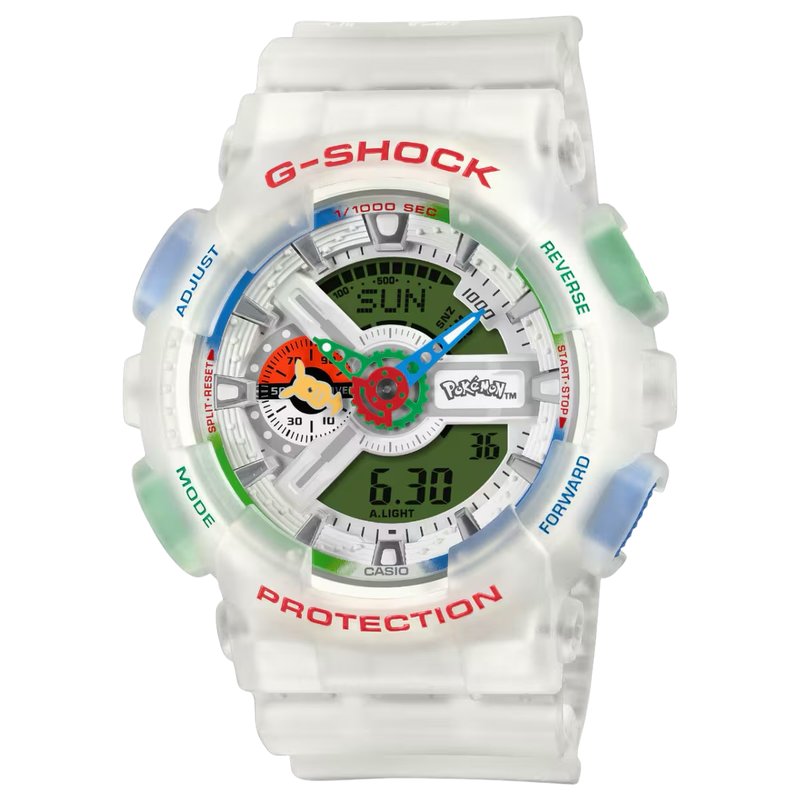
Context matters for pricing. This is not a repeat collab or a minor refresh. The GA-110PKM-7A is the first full-sized G-Shock Pokémon collaboration, which is meaningful for collectors. Previous Pokémon x Casio tie-ups used the smaller Baby-G platform: the BGD-560PKC-1 in 2019 and the BA-110PKC-4A in 2021. This is the first time the GA-110 form factor, which is the large, chunky, sports-analogue case that defines G-Shock for most buyers, has carried official Pokémon branding. That first-of-its-kind status gives collectors a real reason to hold rather than flip, which is relevant to how long resale demand stays elevated.
From a resell-category perspective, G-Shock collabs are still relatively underserved. Specialist resale trackers describe G-Shock collaborations as one of the most underrated opportunities in 2026, partly because the bot and reseller competition is far lighter than on sneaker platforms. That lower-hype environment is a genuine structural advantage for UK operators who are willing to do the work without expensive tooling.
UK retail price and official launch date
The GA-110PKM-7A launched in the UK on 21 July 2026 at £220 RRP, with a further DSML retail drop on 24 July 2026. The official Casio Europe press release confirms the GA-110PKM-7AER went on sale through G-Shock flagship stores, select retailers, and online channels. The watch had already sold out almost instantly in Japan (via lottery) and in the US (standard pre-order, opened 1 July) before the European launch date. That pre-existing US sell-out created genuine anticipation heading into the UK drop, which helped sustain secondary demand rather than collapsing it.
At £220, the UK price is marginally cheaper in USD terms than the $270 US retail price at current exchange rates. That context is worth holding: UK buyers were getting a slight relative discount at retail, but the secondary ceiling in GBP tracks proportionally to the US pattern. With our community monitoring active secondary pricing at around £350, the gross per unit sits at roughly £130 before costs.
How the UK Drop Actually Worked: Casio.co.uk, Retailers, and Per-Person Limits
The notification sign-up mechanic on Casio.co.uk
This is the part most reseller guides miss entirely. Casio.co.uk did not run a standard open queue or a lottery. Instead, the site used a notification sign-up mechanic: prospective buyers registered their interest and received an alert when the product went live. Being on that notification list early was the primary access mechanism, not how fast you could hammer F5 on launch morning.
That changes the preparation entirely. If you were not signed up to the notification in advance, you were already behind. The queue filled quickly once the alert went out, and like most limited watch drops on brand-direct sites, the checkout window was short. A clean browser session with saved payment details beats a late, frantic manual entry every time.
In-store purchase limits and Casio's anti-reseller controls
Evidence from the French launch is instructive. French in-store reservations were capped at one unit per person and required card payment at the point of reservation. That is not a coincidence. It signals that Casio implemented quantity controls globally, including in the UK, to manage reseller behaviour at point of sale.
For UK resellers: one unit per transaction on Casio-direct is likely the hard ceiling, both in-store and online. Multi-unit attempts through the official channel carry real risk of cancellation or flag. If you are thinking about in-store as an alternative to online, some UK retail partners (including independent authorised dealers and jewellers) may have imposed their own per-person limits. Worth calling ahead rather than assuming.
Comparing Casio.co.uk against high street and independent retailers
The official channel is usually the cleanest route for a single unit. Third-party retailers, including department stores and independent watch dealers, sometimes offered a small queue advantage if their notification system was less heavily subscribed than Casio's own. The trade-off is that independent retailers are harder to track in advance, and some imposed their own reservation systems.
For UK resellers managing multiple entries at scale, the better approach is to treat each retail channel as a separate, independent attempt rather than trying to concentrate volume through one. That is exactly the discipline we build in the Hit The Drop community: spreading entries across verified legitimate channels, not attempting to exploit a single site with automation it is not designed to handle. If you are new to managing multiple drop entries without getting flagged, our guide on entering limited drops at scale without getting banned covers the principles, even though it is sneaker-focused.
ACO and Manual Checkout: What Tools Actually Work for Watch Drops
Why sneaker-focused bots underperform on watch retailers
Most automated checkout content in the UK reselling space is written for sneaker platforms: Nike SNKRS, Footsites, JD Sports. The tooling, the proxy profiles, the account warm-up cycles, all of it is optimised for those specific sites. Casio.co.uk is a fundamentally different environment. The checkout architecture is not the same, the bot-detection layers are different, and the drop cadence does not follow the SNKRS patterns that most ACO setups are built around.
Throwing a sneaker-optimised bot at a watch retailer is not just inefficient, it can actively trigger fraud flags. Sites that do not normally see high-volume automated traffic are often more sensitive to anomalous behaviour than the sneaker platforms that have been in a cat-and-mouse game with bots for years. If you want to understand the broader ACO framework and where it genuinely adds value, the guide on how ACO actually works on UK sneaker drops is a good foundation before you assess whether it applies to a specific watch drop.
The case for saved payment details and a fast manual approach
For Casio.co.uk specifically, a prepared manual approach outperforms over-engineered tooling in most scenarios. What that looks like in practice: notification signed up weeks in advance, a clean browser profile (or fresh incognito session) with payment details already saved to the site or via autofill, a stable broadband connection, and the product page open and refreshed at the expected launch time.
The competitive pressure at checkout on watch drops is materially lower than on hyped sneaker releases. Fewer resellers are competing, fewer bots are configured for these sites, and the drop quantity, while limited, is not the SNKRS-scale scarcity that makes manual entry near-impossible on sneakers. A calm, prepared manual entry is often genuinely competitive here.
Where HTD's ACO service adds value is in situations with higher checkout volume, faster sell-through, or more bot-competitive environments. For a single-unit watch entry on a brand-direct site with per-person limits, the honest assessment is that the infrastructure overhead is not justified unless you are coordinating legitimate multi-channel entries across different retail accounts. Our ACO operates on a pay-after-success model: you only pay a percentage of the projected margin when a checkout actually lands. So if it does not hit, you owe nothing. That alignment matters when the margin is already modest.
Platform-specific considerations (Casio.co.uk vs. third-party retailers)
The watch reselling category does see some use of residential proxies for account separation across retail channels. If you are legitimately entering via your own account on Casio and a separate personal account registered to a different household (a family member, for example), residential proxy IP separation helps ensure those entries are treated as distinct. This is not about circumventing limits; it is about ensuring legitimate separate entries are not accidentally flagged as duplicates by IP.
The Real Numbers: UK Net Profit After Fees, Postage, and Platform Costs
eBay.co.uk fee structure and net profit worked example
This is where the discipline really shows - and where the numbers look considerably better than many reseller calculators suggest. Since October 2024, private sellers on eBay UK pay zero selling fees: no final value fee, no per-order fee, no regulatory operating fee. eBay shifted the cost to the buyer in the form of a Buyer Protection fee charged at their checkout - the same model Vinted uses. The seller receives the full sale price. For reference on the full platform comparison, our dedicated guide to eBay and Vinted fees for UK resellers in 2026 covers every cost layer in detail.
One caveat worth knowing: HMRC's trading rules can push frequent, high-volume resellers into the business seller classification, at which point a full fee structure of roughly 12-13% applies. For most members selling individual units through a personal account, the private seller rate - and its £0 platform fee - applies.
Here is a worked example at two secondary sale price scenarios:
-
Retail cost: £220.00
-
Secondary sale price (conservative): £300.00
-
eBay selling fee (private seller): £0.00
-
Royal Mail Special Delivery (insured to £750): £7.85 to £9.00
-
Realistic net (conservative): approximately £71 to £72
-
Secondary sale price (optimistic): £350.00
-
eBay selling fee (private seller): £0.00
-
Royal Mail Special Delivery (insured to £750): £7.85 to £9.00
-
Realistic net (optimistic): approximately £121 to £122
The community data we are tracking puts active secondary pricing at around £350, which places most clean sales in the £120 net range before tax. That is a genuine, repeatable number. It is not four figures; it is a disciplined margin on a watch that took notification prep and a fast checkout. Context matters: for a new reseller building process and cashflow awareness, a clean £120 net on a lower-hype item is more valuable as a learning rep than chasing a hyped sneaker drop with much lower success odds.
Alternative platforms (StockX, Chrono24, Facebook Marketplace)
eBay.co.uk remains the most accessible platform for UK-to-UK transactions. StockX charges 11 to 12.5% all-in depending on seller level, which is competitive with eBay, but StockX ships internationally. UK sellers should factor in currency conversion and any customs implications for non-UK buyers. Authentication is handled by StockX, which reduces buyer disputes but also adds processing time.
Chrono24 is a specialist watch marketplace with lower fraud risk than general platforms, and its buyer base skews toward genuine collectors rather than flippers. For a first-of-its-kind G-Shock collaboration, Chrono24 is worth listing on alongside eBay for visibility with watch enthusiasts who may be willing to pay a premium. Facebook Marketplace carries zero platform fees and enables cash-in-hand local transactions, but authentication risk is entirely on you and the buyer.
Postage costs and the margin squeeze
A watch worth £350 on the secondary market should be sent tracked and insured. Royal Mail Special Delivery Guaranteed (next day, insured to £750) runs approximately £7.85 to £9.00 for a package of this weight. For any item at this price point, it is the right call. Factor it in from the start. Margin squeeze on watches often comes from underestimating packaging and postage, not from fee miscalculation. See our guide on tracking reselling inventory and profit in a spreadsheet for the exact columns to build.
Risk Management: Presale Pitfalls, Market Timing, and Knowing When to Walk Away
Why presale listings on eBay carry delivery and buyer-trust risk
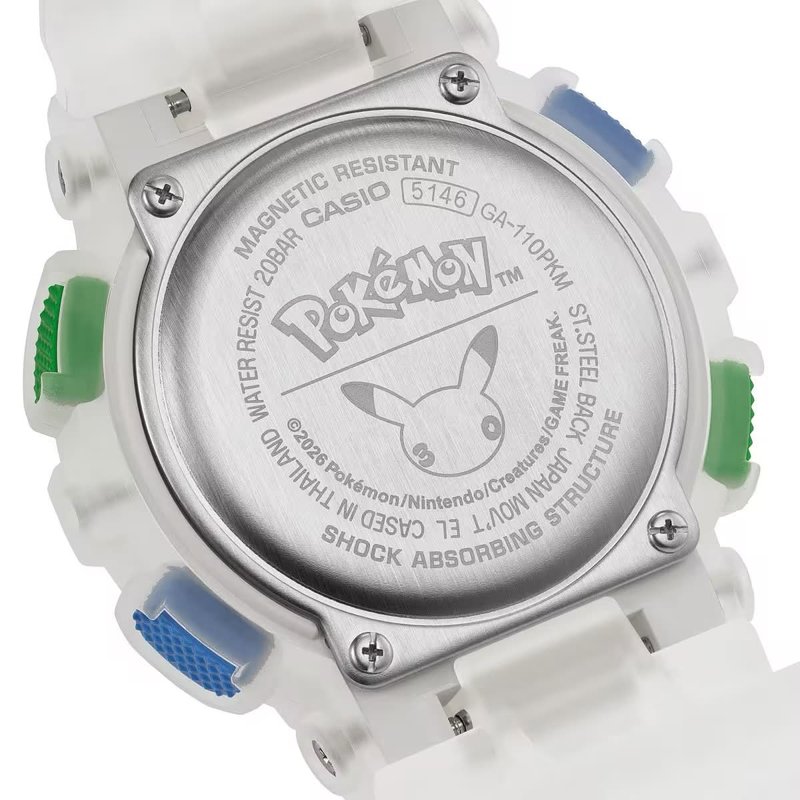
Before the UK launch date, eBay showed numerous active presale listings for the GA-110PKM-7AJR, with sellers listing the watch before it had physically shipped. This is a common pattern on hyped drops and it carries real risk. If your purchase falls through (account cancellation, payment failure, supply issue), you are left with a sold listing and no stock. Chargebacks from disappointed buyers are a real cost, and eBay's seller protection does not cover you fully in presale disputes. Do not sell what you do not hold.
Secondary market saturation and the reseller-flood effect
The US data illustrates the saturation risk clearly. US resellers who anticipated four-figure flips were disappointed when secondary market competition arrived, with average secondaries settling around $450 against a $270 retail price, delivering roughly $100 to $120 net after eBay's fee structure and shipping. High visibility ahead of a drop floods secondary supply and caps the resale ceiling. The UK market benefits from the US sell-out as a demand signal, but it also inherits the risk that every reseller who managed to secure a UK unit will list simultaneously.
The practical implication: the sooner you list after the drop, the better your price position. Hold too long hoping for the ceiling to rise and you are competing with an increasingly saturated secondary market. Watch the completed listings, not just the active ones, to understand where buyers are actually transacting. Our guide on how to price limited edition resale items using UK comps walks through exactly that process.
Setting a profit threshold and knowing when to walk away
The hardest discipline in reselling is not getting in; it is knowing when not to. If you missed the launch day and secondary prices for the GA-110PKM-7A have already settled below around £280, your net after postage may not clear £50. At that point, buying a unit on the secondary market to flip again is not a trade, it is speculation. Set your minimum net profit threshold before you enter (for this watch, £50 is a reasonable floor) and do not override it because of sunk time or FOMO.
Sitting on cash is not a loss. It is capital preservation for the next drop. That is the operator mindset we build at Hit The Drop: the discipline to walk away from a trade that does not stack is worth more over a year of drops than any single hit. For a broader view of how to run reselling as a real business with that kind of systematic thinking, the guide on how to run reselling like a real business covers the foundations.
The GA-110PKM-7A is not a lottery ticket. It is a training round for disciplined resellers: a lower-hype item, genuine collector demand, real but modest margin, and a clear set of drop mechanics that rewards preparation over luck. That is exactly the kind of drop where the habits you build (notification sign-up, margin modelling, platform choice, presale discipline) compound into something real over time.
If you want to approach drops like this with the right community and infrastructure behind you, Hit The Drop is a UK Discord-based reselling community where operators share what actually works, and an ACO service that only charges when a checkout succeeds. No upfront fees, no guaranteed income promises, no hype. Just a calm, operator-focused environment for resellers who want to do this properly. Request community access and see whether it fits how you want to work.
🧡
Sources
- https://www.g-central.com/pokemon-to-release-g-shock-ga-110pkm-7a-for-30th-celebration/
- https://www.casio.com/europe/corporate/casio-corporate/news/2026/pokemon-ga-110pkm-7a/
- https://www.notebookcheck.net/Casio-s-Pokemon-30th-anniversary-G-Shock-finally-arrives-in-Europe-and-UK.1347232.0.html
- https://www.frooition.com/ebay-fee-calculator-uk/
- https://www.underpriced.app/blog/platform-fees-comparison-2026
- https://www.underpriced.app/blog/is-casio-gshock-worth-reselling
- https://resellcalendar.com/news/news/pokemon-g-shock-ga-110pkm-7a-reseller-scalper/
- https://www.ebay.com/p/4095863911
Skip the queue
Use FASTPASS as your referral when you join Hit The Drop for instant approved access, no member vouch needed.